 EDWARDS
THEMES
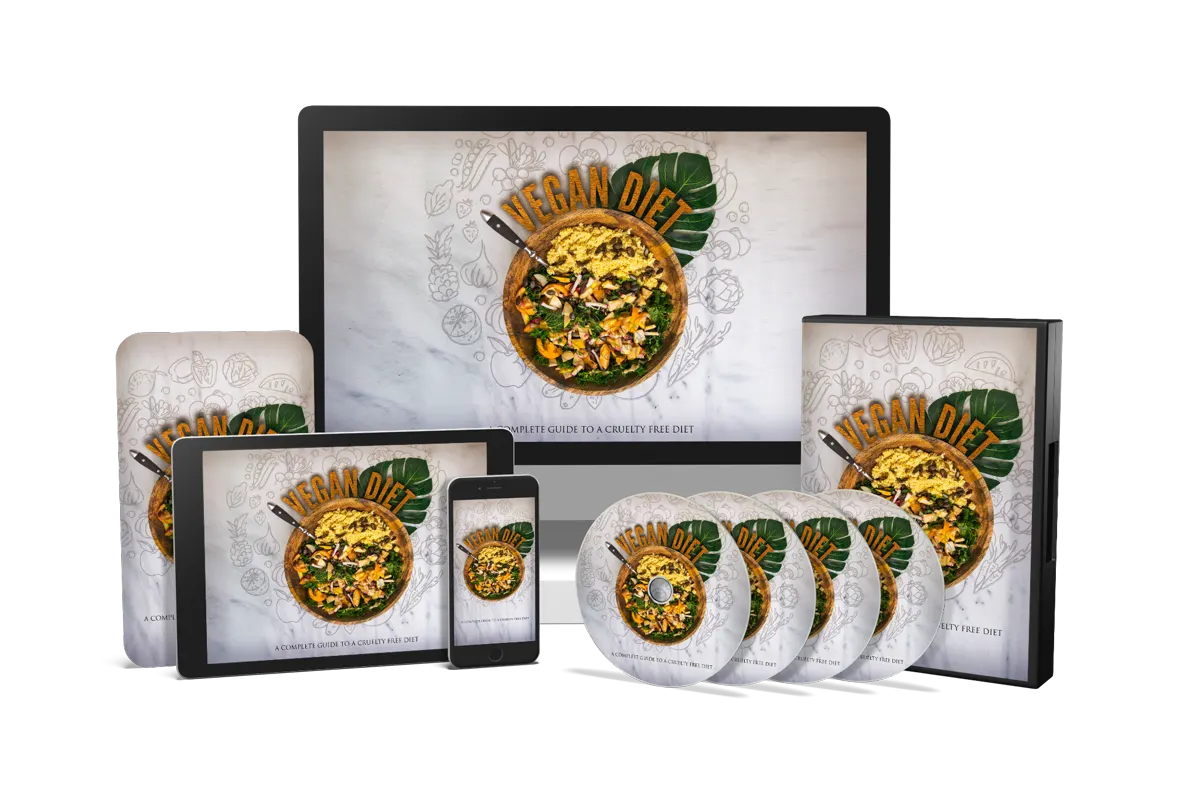
FREE PUBLIC EDWARDS THEME COURSE
VEGAN DIET UP
Learn the meanings, nutrition principles, ethical questions, practical planning skills and respectful communication needed to understand vegan living responsibly.
11 1080p HD lessons6 formal units6 assessment tests6 print handoutsComplete source vaultFree public access
From vegan foundations to a thoughtful, practical living portfolio.
This competency-based curriculum follows the first-to-last supplied recordings. Every unit combines definitions, visual explanation, an HD lesson, applied practice, transparent assessment criteria, a self-marking test and a print-ready handout.
- 01
Foundations, Meaning and Respectful Choice
Establish the course boundary, define vegan living and compare related food patterns without pressure or stigma.
Open Unit 1 → - 02
Nutrition and Plant-Protein Literacy
Examine nutritional adequacy, reliable vitamin B12 planning and varied plant-protein choices with appropriate safety boundaries.
Open Unit 2 → - 03
Sustainable Transition and Habit Design
Use gradual, compassionate behaviour-change strategies that fit real routines and support recovery from setbacks.
Open Unit 3 → - 04
Ethics, Products and Claim Verification
Connect values to researched action, distinguish product claims and detect vague or outdated green marketing.
Open Unit 4 → - 05
Meal Planning, Budget and Food Safety
Create a realistic planning system that connects preferences, schedule, budget, nutrition, preparation and safe storage.
Open Unit 5 → - 06
Whole-Person Wellbeing and Final Portfolio
Integrate nutrition, ethics, habits and planning into a respectful portfolio with realistic next steps and professional questions.
Open Unit 6 →
HEALTH AND SAFETY NOTICE · REVIEWED 17 SEPTEMBER 2026
This course teaches informed choices; it does not prescribe a personal diet.
A varied, well-planned vegan diet can meet many people's needs, but life stage, health conditions, medicines, allergies, food access and individual requirements matter. Seek individualized advice from a qualified clinician and registered dietitian—especially for children, pregnancy or breastfeeding, older age, diagnosed illness, restrictive-eating concerns or symptoms of deficiency.
FORMAL CURRICULUM DESIGN
Understand → investigate → practise → demonstrate.
Each lesson preserves the supplied source while adding current health literacy, precise language and inclusive assessment. Learners move from foundational vocabulary to analysis, practical planning, ethical reasoning and a final portfolio.
Unit → topic → subtopic → evidence.
Read the definition, watch the supplied 1080p lesson, inspect the source-context note, listen with text-to-speech support, complete the visual and practical work, meet the criteria, take the test and print the unit handout.
Foundations, Meaning and Respectful Choice
Establish the course boundary, define vegan living and compare related food patterns without pressure or stigma.
LESSON 1 · 1:39 · 1920 × 1080 HD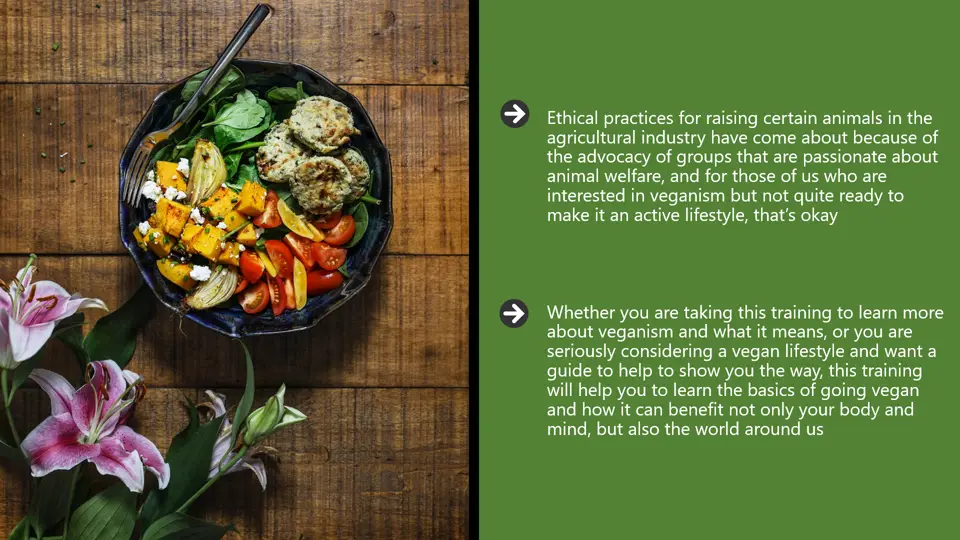
TOPIC · Course orientation and informed choice
Orientation: A Thoughtful Introduction to Vegan Living
Subtopic: Personal motivations, respectful inquiry, source limits and health boundaries
Vegan living generally avoids animal-derived foods and may also avoid animal-derived products because of ethical, environmental, cultural or personal reasons. This course studies the supplied recordings without demanding that every learner make the same choice and without replacing individualized nutrition or medical advice.
Source-context note
The introduction uses advocacy language and emotionally charged examples. Study the reasons presented while separating personal values, factual claims and individual health decisions.
- Veganism
- A practice that seeks to avoid animal-derived foods and, often, animal-derived products as far as practicable.
- Motivation
- A reason that directs a person toward a choice or action.
- Informed choice
- A decision made after considering reliable information, personal circumstances, alternatives and possible effects.
- Health literacy
- The ability to find, understand and use health information responsibly.
Learning outcomes
- Explain the educational purpose and limits of the course.
- Identify several possible motivations without stereotyping vegans or non-vegans.
- Turn a strong claim into a respectful question for investigation.
Visual illustration
Draw a four-branch motivation tree labelled ethics, environment, health and personal values. Add a centre circle labelled informed choice and a boundary showing where professional advice may be needed.
Applied activity
Write a short course-entry reflection: what you already know, what you want to verify and which personal circumstances would affect a real dietary decision.
Assessment evidence
A one-page orientation reflection and motivation map.
- Multiple motivations are represented
- Language is respectful
- Questions are evidence-seeking
- The educational boundary is clear
LESSON 2 · 3:29 · 1920 × 1080 HD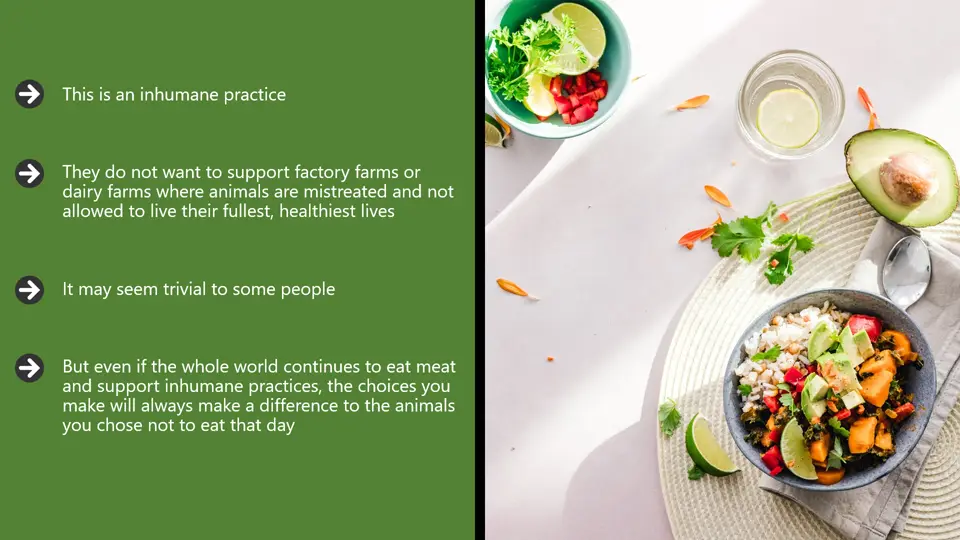
TOPIC · Vegan foundations
What Veganism Means in Everyday Life
Subtopic: Food choices, animal-derived ingredients, product research and compassionate communication
A vegan food pattern excludes meat, fish, dairy, eggs and other animal-derived ingredients. A wider vegan lifestyle may also consider clothing, cosmetics and household products. The practical boundary is researched and applied by individuals in different ways.
Source-context note
The lesson emphasizes cruelty concerns. The curriculum preserves that ethical viewpoint while avoiding graphic persuasion and absolute claims about every producer or product.
- Animal-derived ingredient
- An ingredient obtained wholly or partly from an animal.
- By-product
- A secondary material produced during another process; some by-products are animal-derived.
- Ingredient review
- Checking a product label and reliable manufacturer information before deciding whether it fits a stated standard.
- Compassionate communication
- Sharing a position without shaming, coercing or demeaning another person.
Learning outcomes
- Describe food and non-food dimensions of vegan living.
- Use labels and manufacturer information as evidence.
- Explain a personal boundary without lecturing or shaming others.
Visual illustration
Create two connected circles: food choices and wider lifestyle choices. Place product research, values and respectful communication in the overlap.
Applied activity
Select three hypothetical products. Identify what information would be needed to determine whether each is vegan and write one respectful question for the manufacturer.
Assessment evidence
A three-product evidence table and one communication script.
- Food exclusions are accurate
- Evidence needs are named
- Uncertainty is admitted
- Communication remains respectful
LESSON 3 · 4:10 · 1920 × 1080 HD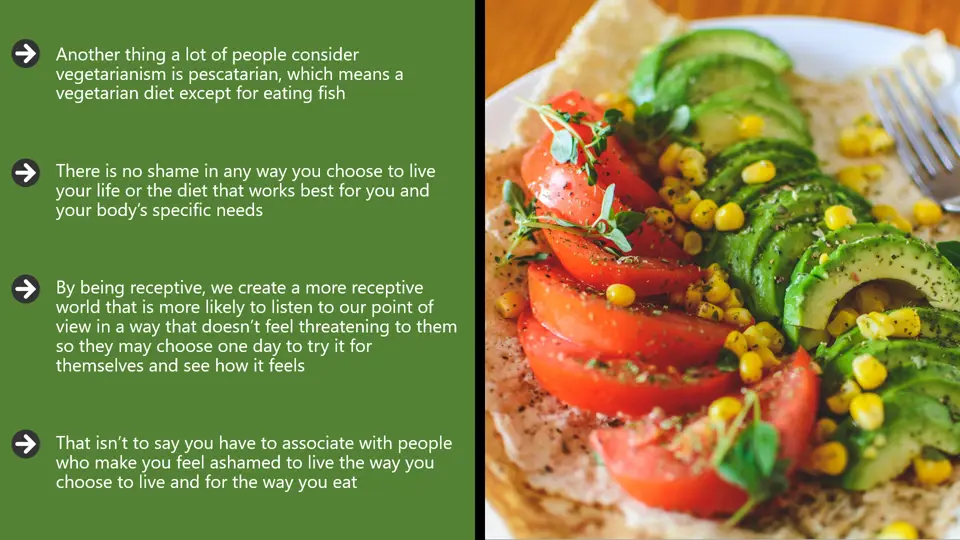
TOPIC · Diet-pattern vocabulary
Vegan, Vegetarian and Related Food Patterns
Subtopic: Vegan, lacto-vegetarian, ovo-vegetarian, lacto-ovo and pescatarian distinctions
Diet labels describe patterns, but labels alone do not reveal nutritional quality, motivation or exact practice. Asking clear questions about ingredients is more reliable than assuming everyone uses a label in exactly the same way.
Source-context note
The recording describes several labels and social situations. The lesson adds precision and reminds learners that individual practice and health needs vary.
- Vegetarian
- A person who does not eat meat or fish; individual patterns may include eggs or dairy.
- Lacto-vegetarian
- A vegetarian pattern that includes dairy but excludes eggs.
- Ovo-vegetarian
- A vegetarian pattern that includes eggs but excludes dairy.
- Pescatarian
- A food pattern that excludes meat but includes fish; it is distinct from vegetarian and vegan patterns.
Learning outcomes
- Differentiate common plant-focused diet labels.
- Ask ingredient-specific questions at social events.
- Respect another person's stated food boundary.
Visual illustration
Build a labelled comparison matrix with rows for meat, fish, dairy and eggs and columns for vegan, lacto-, ovo-, lacto-ovo vegetarian and pescatarian patterns.
Applied activity
Write a polite host-and-guest dialogue that checks ingredients and cross-contact without blame. Then classify five example meals using the matrix.
Assessment evidence
A completed comparison matrix and social-situation dialogue.
- Patterns are distinguished correctly
- Questions are specific
- No label is ranked morally
- The dialogue protects dignity
Nutrition and Plant-Protein Literacy
Examine nutritional adequacy, reliable vitamin B12 planning and varied plant-protein choices with appropriate safety boundaries.
LESSON 4 · 2:39 · 1920 × 1080 HD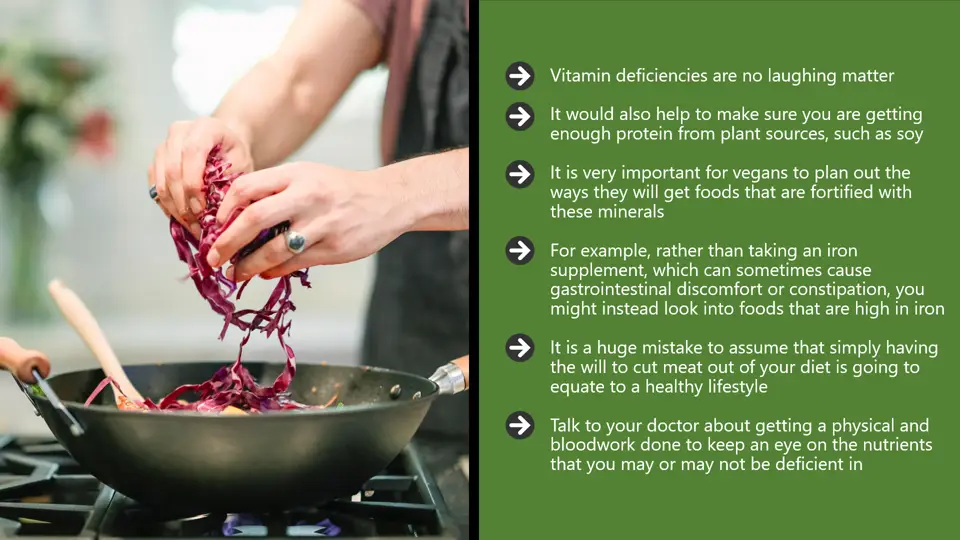
TOPIC · Nutrition literacy
Balanced Vegan Nutrition and Nutrient Awareness
Subtopic: Variety, fortified foods, supplements, protein, iron, calcium, iodine, selenium, vitamin D and vitamin B12
A vegan diet is not automatically balanced. Nutritional adequacy depends on variety, sufficient energy, suitable protein foods and attention to nutrients that may require fortified foods, supplements or professional guidance. Vitamin B12 deserves explicit planning because unfortified plant foods are not reliable natural sources.
Source-context note
The supplied lesson warns about deficiencies but gives simplified examples. Current guidance also highlights calcium, iron, iodine, selenium, vitamin D and vitamin B12 planning.
- Nutrient adequacy
- Meeting the body's needs for energy, protein, vitamins, minerals and other essential nutrients.
- Fortified food
- A food to which nutrients have been added.
- Micronutrient
- A vitamin or mineral needed in relatively small amounts for normal function.
- Bioavailability
- The proportion of a nutrient that is absorbed and available for the body to use.
Learning outcomes
- Reject the idea that vegan automatically means nutritionally complete.
- Identify nutrients that deserve deliberate planning.
- Explain why vitamin B12 sources must be reliable and verified.
Visual illustration
Design a nutrient wheel with food variety at the centre and spokes for protein, iron, calcium, iodine, selenium, vitamin D, omega-3 fats and vitamin B12.
Applied activity
Audit a fictional one-day menu. Mark strengths, possible gaps, information that is missing and questions for a registered dietitian. Do not prescribe a personal supplement dose.
Assessment evidence
A nutrient wheel and annotated fictional menu audit.
- Variety and energy are considered
- B12 is treated explicitly
- Missing information is visible
- No individualized prescription is made
LESSON 5 · 2:24 · 1920 × 1080 HD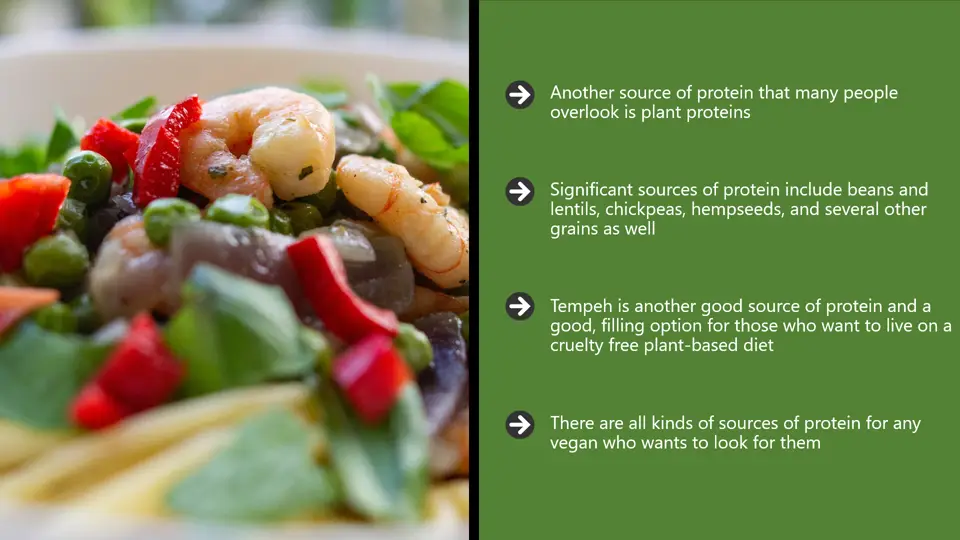
TOPIC · Protein literacy
Plant Protein: Sources, Portions and Completeness
Subtopic: Beans, lentils, peas, soy foods, seitan, nuts, seeds, grains and varied intake
Protein supports growth, repair and many body processes. A varied vegan pattern can provide protein through legumes, soy foods, seitan, nuts, seeds and grains, but needs differ by age, body size, health, pregnancy, training and total energy intake.
Source-context note
The recording introduces seitan and plant proteins. The curriculum broadens the list and adds allergy, gluten, energy and life-stage context.
- Protein
- A nutrient made from amino acids and used in body structure, enzymes, transport and repair.
- Amino acid
- A building block of protein.
- Legume
- A plant family that includes beans, peas, lentils and peanuts.
- Seitan
- A protein-rich food made mainly from wheat gluten and unsuitable for people who must avoid gluten.
Learning outcomes
- Identify a range of plant protein sources.
- Connect protein choices to allergies, gluten and individual needs.
- Build variety across meals rather than relying on one food.
Visual illustration
Draw a protein pantry with shelves for legumes, soy foods, wheat-based foods, nuts and seeds, and grains. Add allergy and gluten symbols where relevant.
Applied activity
Create three balanced fictional meal combinations using different protein families. Label allergens, affordable substitutions and the information needed to assess portions.
Assessment evidence
A three-meal protein variety chart with safety notes.
- Sources are genuinely protein-containing
- Variety is shown
- Allergens and gluten are marked
- Portions are not presented as universal
Sustainable Transition and Habit Design
Use gradual, compassionate behaviour-change strategies that fit real routines and support recovery from setbacks.
LESSON 6 · 5:05 · 1920 × 1080 HD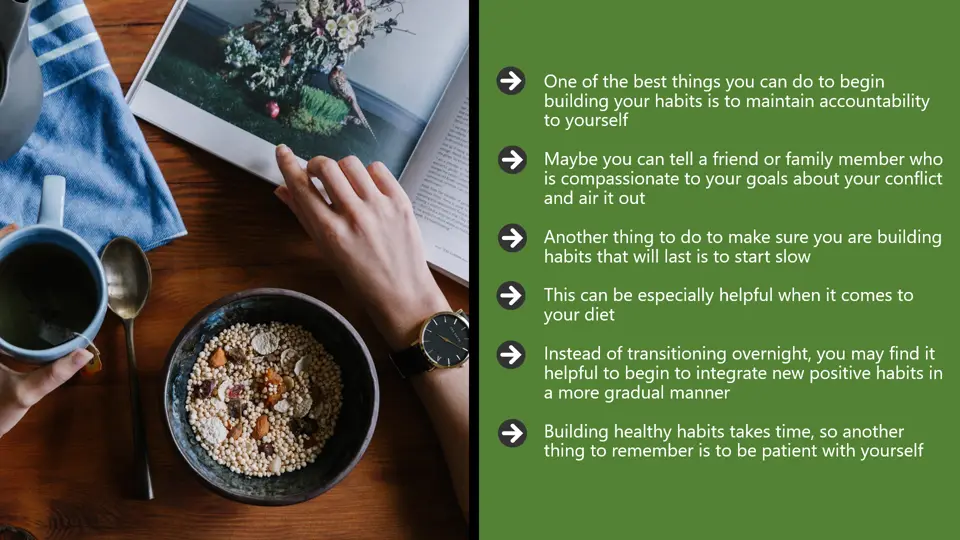
TOPIC · Behaviour change
Building Sustainable New Habits
Subtopic: Gradual transition, environment design, accountability, cravings, flexibility and self-compassion
A sustainable habit is supported by clear cues, practical preparation, repetition, social support and recovery after setbacks. There is no universal number of days in which every habit forms, and a difficult moment is information—not proof of failure.
Source-context note
The recording suggests fixed habit-building timelines and graphic motivation. The curriculum replaces fixed promises with gradual practice, self-compassion and personally appropriate support.
- Habit
- A behaviour that becomes more automatic through repetition in a stable context.
- Cue
- A situation or signal that prompts a behaviour.
- Accountability
- A supportive process for reviewing an intention and its follow-through.
- Self-compassion
- Responding to difficulty with honesty and care rather than shame.
Learning outcomes
- Plan one gradual, observable behaviour change.
- Use environmental supports and accountability constructively.
- Respond to setbacks without all-or-nothing thinking.
Visual illustration
Create a habit loop: cue → planned action → useful result → reflection. Place preparation and support around the loop and a recovery path after a missed action.
Applied activity
Write a seven-day rehearsal plan for one hypothetical vegan-friendly habit. Include a cue, minimum action, backup option, support person and reflection question.
Assessment evidence
A seven-day habit rehearsal and setback-recovery statement.
- Action is specific and realistic
- Support is consensual
- Backup option is practical
- Reflection avoids shame
Ethics, Products and Claim Verification
Connect values to researched action, distinguish product claims and detect vague or outdated green marketing.
LESSON 7 · 3:32 · 1920 × 1080 HD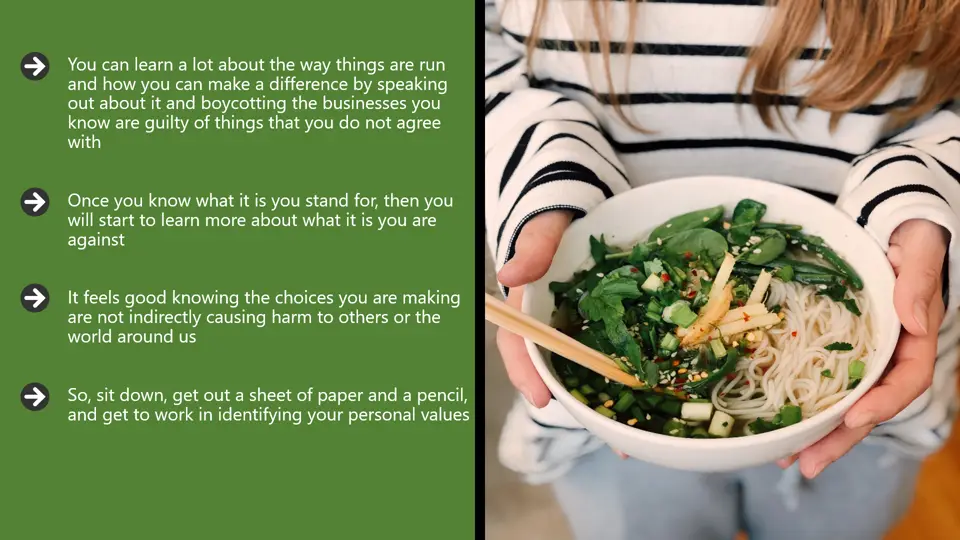
TOPIC · Ethical reasoning
Values, Ethics and Responsible Consumer Action
Subtopic: Beliefs, purchasing choices, corporate practices, boycotts and evidence-based advocacy
Ethical consumer action links a stated value to a researched choice, while recognizing that access, price, culture and imperfect information constrain decisions. A boycott is one possible collective or personal action, not a test of a person's worth.
Source-context note
The lesson links purchasing to values. Learners should verify current company practices and avoid treating one purchase as proof of complete ethical consistency.
- Ethical reasoning
- Considering values, duties, consequences, rights and context when judging an action.
- Ethical consumerism
- Using purchasing or non-purchasing choices to express social, environmental or animal-welfare concerns.
- Boycott
- A decision to withhold purchasing or participation in order to protest or seek change.
- Evidence trail
- The sources and reasoning used to support a conclusion.
Learning outcomes
- Connect a value to a proportionate action.
- Research a company claim before sharing it.
- Recognize access and affordability constraints.
Visual illustration
Draw an ethical-decision compass with values, evidence, impact, access and alternatives. Place reflection at the centre.
Applied activity
Investigate a hypothetical company statement using a source-quality checklist. Recommend one proportionate action and name the limits of the available evidence.
Assessment evidence
An ethical-decision compass and company-claim evidence trail.
- Value and action are connected
- Sources are assessed
- Constraints are acknowledged
- Recommendation is proportionate
LESSON 8 · 5:32 · 1920 × 1080 HD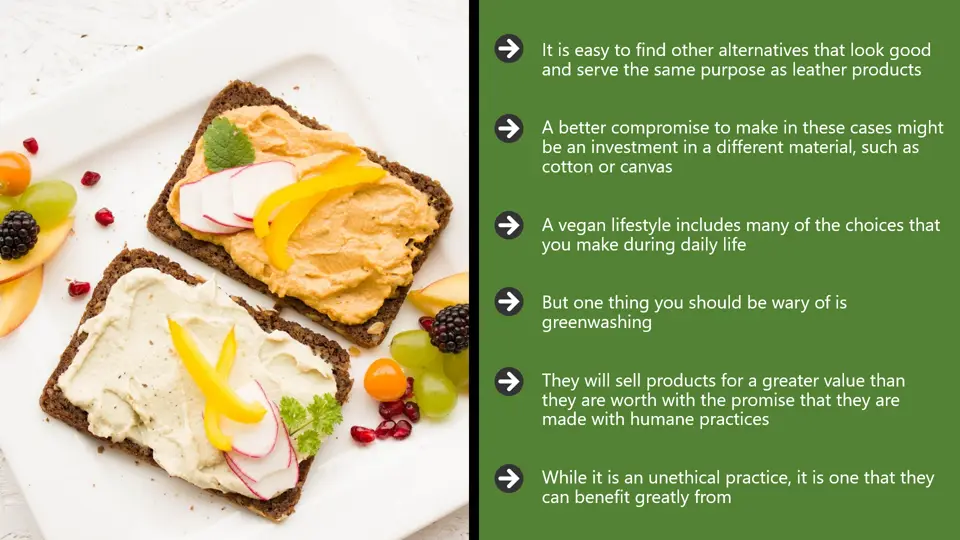
TOPIC · Consumer and media literacy
Beyond Food: Products, Labels and Greenwashing
Subtopic: Cruelty-free claims, animal-derived materials, local alternatives and specific environmental claims
A vegan lifestyle may consider cosmetics, clothing and household goods as well as food. Terms such as vegan, cruelty-free, natural and green can refer to different issues; a credible claim should be specific, current and supported rather than vague or decorative.
Source-context note
The recording includes graphic allegations and examples that may change. The curriculum teaches claim verification and avoids repeating unverified current accusations.
- Cruelty-free
- A claim generally related to animal testing; it does not automatically mean every ingredient is vegan.
- Greenwashing
- Using environmental language or imagery that creates a stronger impression than the evidence supports.
- Certification
- A claim checked against defined requirements by a named body.
- Traceability
- The ability to follow a product or ingredient through its supply chain.
Learning outcomes
- Separate vegan and cruelty-free claims.
- Recognize vague environmental marketing.
- Request specific evidence and dates for product claims.
Visual illustration
Design a label detective lens with five questions: What exactly is claimed? About which product? According to whom? Supported by what? Current as of when?
Applied activity
Audit four fictional labels—vegan, cruelty-free, natural and eco-friendly. Record what each proves, what it does not prove and the next evidence to seek.
Assessment evidence
A four-label audit and one rewritten, evidence-specific claim.
- Claims are not treated as interchangeable
- Evidence and date are requested
- Greenwashing signals are identified
- Rewrite is specific
Meal Planning, Budget and Food Safety
Create a realistic planning system that connects preferences, schedule, budget, nutrition, preparation and safe storage.
LESSON 9 · 8:57 · 1920 × 1080 HD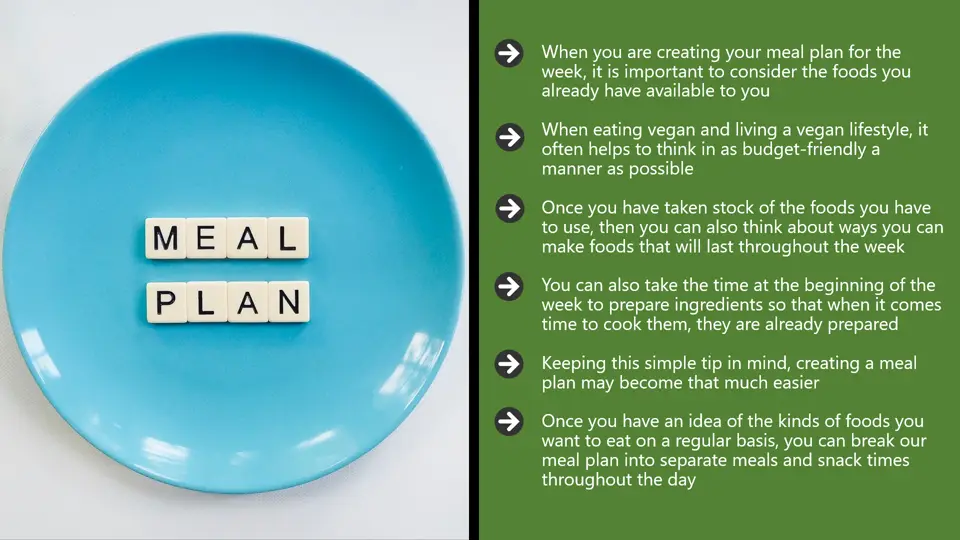
TOPIC · Applied meal-planning literacy
Meal Planning, Budgeting and Food Preparation
Subtopic: Preferences, pantry inventory, balanced components, batch preparation, storage, seasonality and household context
Meal planning connects nutritional needs with schedule, skills, budget, culture, storage and enjoyment. A useful plan begins with foods a household can access and safely prepare, then adds variety and reliable nutrient sources rather than depending on a rigid template.
Source-context note
The lesson contains a long practical planning discussion and a few simplified nutrition statements. Use authoritative guidance for nutrients and local food-safety guidance for storage times.
- Meal plan
- A practical schedule of meals and snacks designed around needs, resources and routine.
- Pantry inventory
- A record of foods already available before shopping.
- Batch preparation
- Preparing ingredients or meals in larger amounts for planned later use.
- Food safety
- Practices that reduce contamination and foodborne illness during purchase, storage, preparation and service.
Learning outcomes
- Build a realistic plan around schedule and available foods.
- Use seasonality, leftovers and batch preparation to manage cost.
- Include a nutrient and food-safety check.
Visual illustration
Create a weekly planning board with columns for schedule, meal components, preparation, storage, leftovers and nutrient check.
Applied activity
Plan three hypothetical days using a pantry inventory and a fixed fictional budget. Include one batch-cooked item, one safe leftover plan, a B12 source question and substitutions for a mixed-diet household.
Assessment evidence
A three-day planning board, shopping list and food-safety checklist.
- Plan fits the stated schedule
- Budget and leftovers are considered
- Nutrient check is visible
- Storage practice is safe
Whole-Person Wellbeing and Final Portfolio
Integrate nutrition, ethics, habits and planning into a respectful portfolio with realistic next steps and professional questions.
LESSON 10 · 5:32 · 1920 × 1080 HD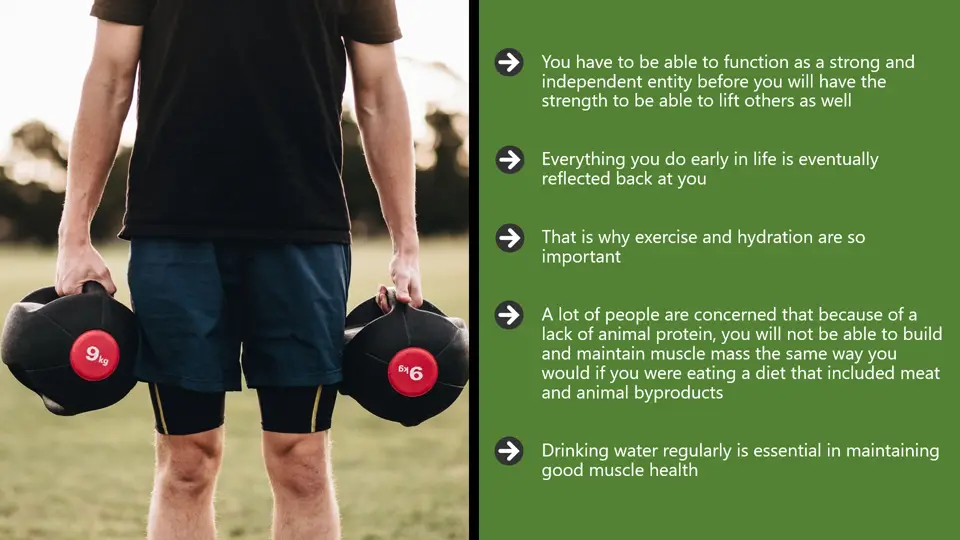
TOPIC · Whole-person wellbeing
Whole-Person Wellbeing: Hydration, Movement and Support
Subtopic: Hydration, movement, recovery, confidence, muscle support and non-stigmatizing self-care
Wellbeing is influenced by food, hydration, movement, sleep, stress, health conditions and social support. Exercise and hydration are valuable for many people, but needs and safe activities vary. They should not be used to prove that someone is a good vegan or to shame a body.
Source-context note
The recording connects hydration, exercise, confidence and muscle. The curriculum removes unsupported guarantees and appearance-based expectations.
- Hydration
- Maintaining enough body water for normal function.
- Physical activity
- Any bodily movement produced by skeletal muscles that uses energy.
- Recovery
- Rest and support that allow adaptation after physical or mental effort.
- Weight stigma
- Negative judgment or discrimination based on body weight or size.
Learning outcomes
- Explain wellbeing as a connected system.
- Avoid universal hydration or exercise prescriptions.
- Plan supportive, non-stigmatizing self-care questions.
Visual illustration
Draw a wellbeing wheel with food, hydration, movement, sleep, recovery, healthcare and social support. Use arrows to show interaction rather than ranking.
Applied activity
Build a fictional wellbeing check-in for an adult learner. Include preferences, access, medical questions, warning signs and a support plan without prescribing targets.
Assessment evidence
A labelled wellbeing wheel and respectful check-in form.
- Multiple wellbeing factors are connected
- No universal target is prescribed
- Stigma is avoided
- Professional referral is appropriate
LESSON 11 · 2:14 · 1920 × 1080 HD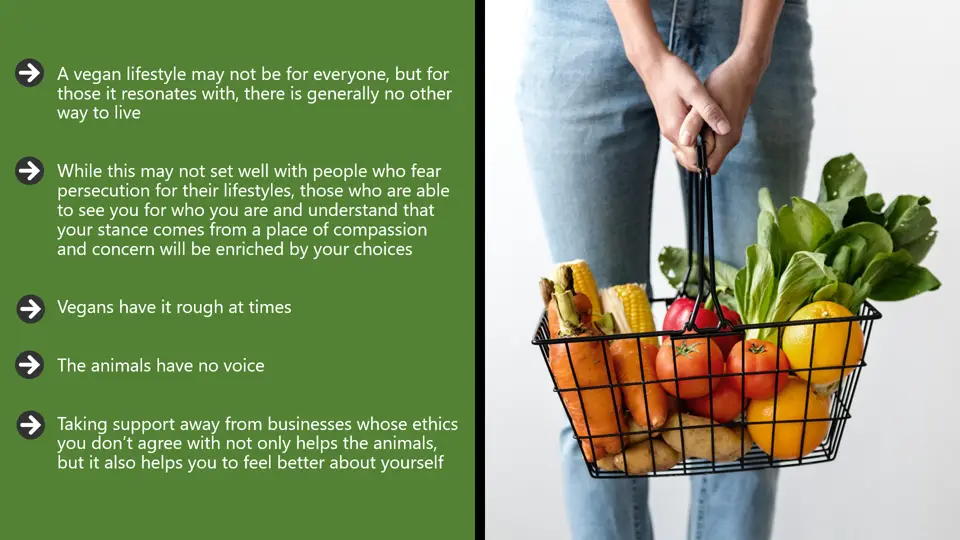
TOPIC · Synthesis and reflection
Conclusion: Build an Informed Vegan-Living Portfolio
Subtopic: Personal values, realistic boundaries, compassion, evidence and next-step questions
A thoughtful conclusion does not demand perfection. It explains what was learned, identifies remaining questions, protects health and relationships, and chooses actions that are evidence-aware, compassionate and realistic within a person's circumstances.
Source-context note
The conclusion strongly advocates vegan living. Learners may engage with that viewpoint while preserving respect, autonomy and evidence-based health decisions.
- Reflection
- Deliberate examination of experience, evidence, feelings and future action.
- Practicable
- Capable of being carried out within real circumstances.
- Pluralism
- Respect for people who hold different values or make different reasoned choices.
- Action plan
- A specific sequence of achievable steps, supports and review points.
Learning outcomes
- Synthesize learning from nutrition, ethics and practical planning.
- State uncertainty and professional questions honestly.
- Present a respectful, non-prescriptive portfolio.
Visual illustration
Create a pathway from values → evidence → practical plan → support → review. Add a bridge marked compassion for self, animals, people and community.
Applied activity
Assemble the capstone portfolio and write a 300-word conclusion explaining what changed in your understanding, which claims still need checking and how you would discuss next steps with a qualified professional.
Assessment evidence
A six-part VEGAN DIET UP portfolio and reflective conclusion.
- Learning is synthesized
- Uncertainty is acknowledged
- Health boundaries are protected
- Actions are realistic and respectful
Use the original course artwork for visual and information literacy.
The supplied promotional bundle, mind map, resource guide and cheat sheet are preserved as learning references. Study their hierarchy, imagery and promises while applying the course's accuracy, safety and ethical-communication standards.
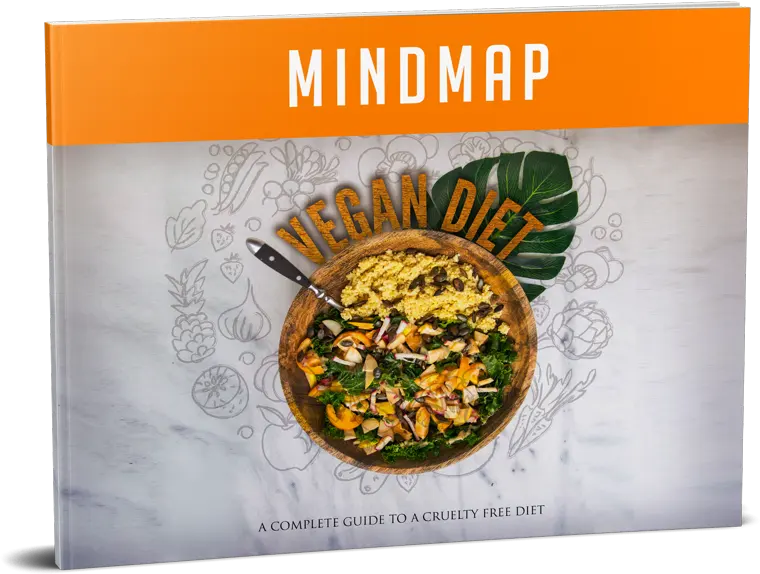
Mind-map study
Connect motivations, nutrients, habits, product research, meal planning and support.
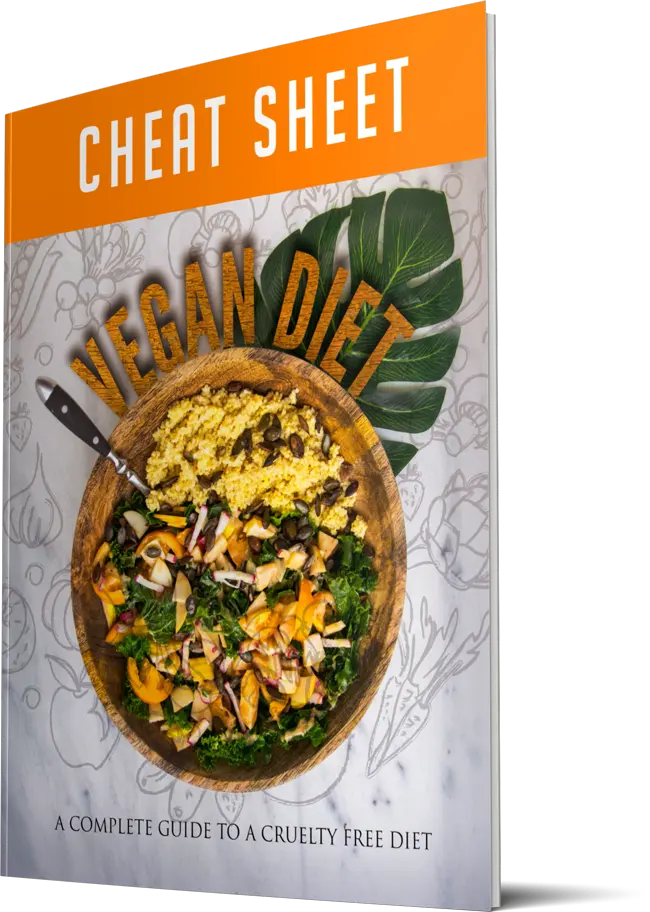
Checklist redesign
Turn promotional shortcuts into accurate, practical and verifiable questions.
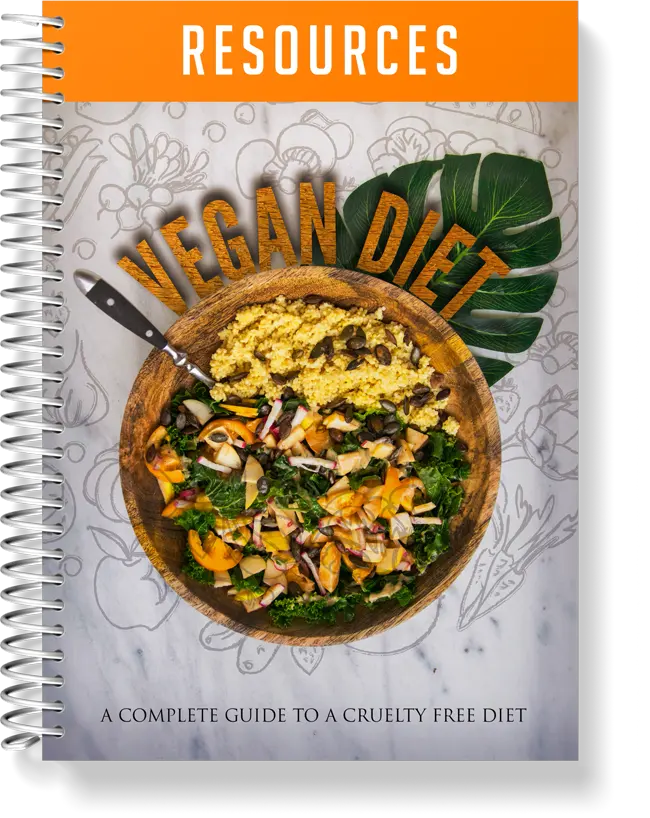
Resource evaluation
Classify sources by purpose, date, authority, evidence and relevance.
Original promotional artwork supplied by the course owner. Selected legacy design resources carry the attribution “Designed by Freepik” under the included source license.
Listen, read, view, download and study the original package.
All supplied learner-facing files and publisher materials are organized below. Audio editions support listening access; original artwork and editable publisher files are preserved in downloadable archives. Legacy sales materials retain their original wording for advertising-literacy study and do not change this course's free public status.
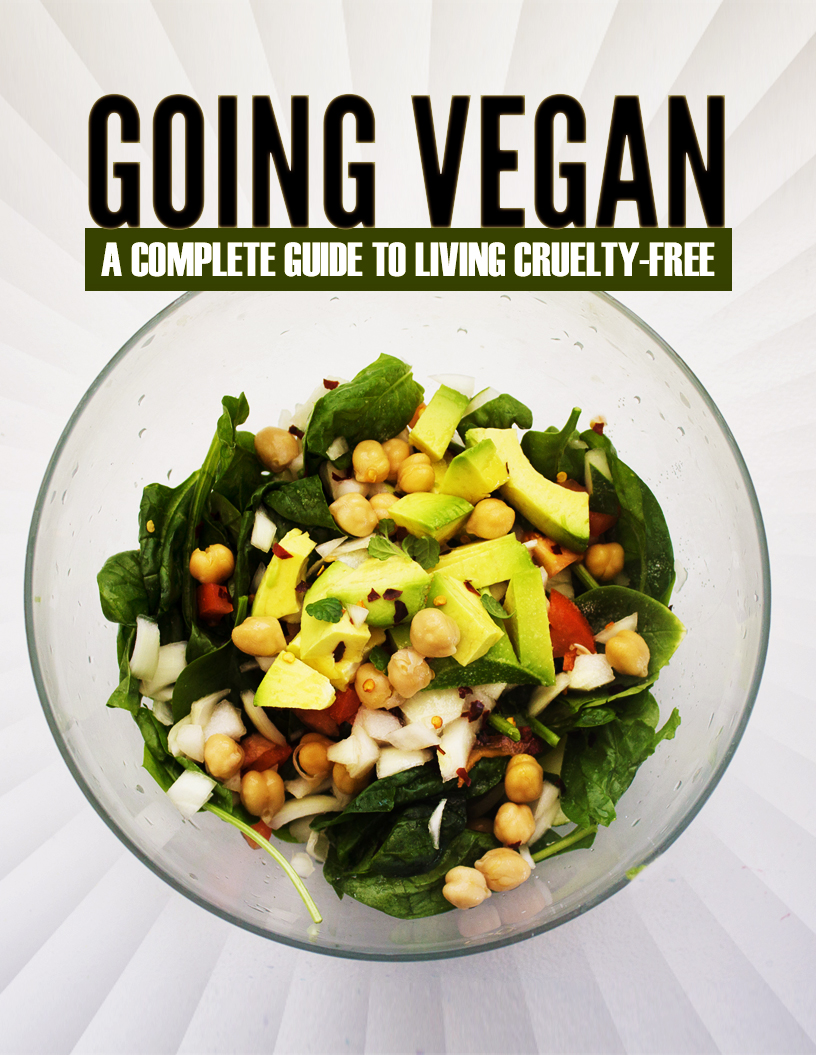
ORIGINAL SIX-PAGE REPORT
Going Vegan: A Complete Guide to Living Cruelty-Free
Read the supplied report as source material, then compare its claims, language and recommendations with the current authoritative links and health boundaries in this course.
Open or print the PDF report ↗SUPPLEMENTAL 1080P VIDEO
Alternate meal-planning edition
Download the alternate HD lessonAUDIO EDITIONS
Nine supplied audio-only recordings
Separate audio files were supplied for the introduction, Lessons 2–8 and the conclusion. Lessons 9–10 remain available with audio inside their HD videos.
Download the complete audio collectionCourse, ebook, presentation, audio and deluxe-package artwork
ORIGINAL PROMOTIONAL MEDIA
Advertising-literacy archive
These supplied videos use legacy purchase, urgency and upgrade language. Examine the claims, audience, visual hierarchy and calls to action; the live VEGAN DIET UP course remains free.
Preserved source collections
The artwork collection is divided into two manageable ZIP files. The publisher archive includes the supplied report, editable documents, presentation, email copy, legal templates, licenses and legacy web source. Legacy code is archived rather than executed.
PUBLIC COURSE PREVIEW
Watch the course preview, then continue through the complete free curriculum.
See how the course connects nutrition, protein, habits, ethical consumer research, meal planning and whole-person wellbeing. Then start with the introduction and build a practical, evidence-aware final portfolio.
Use current sources for current decisions.
SUMMATIVE CAPSTONE
Produce a 30-day VEGAN DIET UP learning portfolio.
Submit a terminology map, a nutrient-and-protein audit, a seven-day habit rehearsal, an ethical product-claim investigation, a three-day meal-planning simulation, a whole-person wellbeing map and a reflective list of questions for a qualified professional.
- Vocabulary and conceptual accuracy — 20%Vegan and vegetarian patterns, nutrients, claims and product terms are clearly distinguished.
- Nutrition and source literacy — 20%Variety, vitamin B12, protein, evidence quality and information gaps are visible.
- Practical planning — 20%Habits, budget, schedule, preparation, storage and household context are addressed.
- Ethics and communication — 20%Values are linked to researched, proportionate action without shame or coercion.
- Reflection and safety — 20%Health boundaries, uncertainty, professional questions and realistic next steps are explicit.
