TENTH COURSE-MATERIAL SET · UNIT TWELVE

Offer &
Conversion
Literacy Studio

Read six supplied campaign graphics as designed arguments. Learn how hierarchy, benefits, access language, bonuses and calls to action influence decisions—and how to use them truthfully.

Study the six graphics ↓
DEFINITIONS & MEANINGS

Design directs attention.
Ethics directs design.

Offer
The complete exchange presented to an audience: what is provided, who it is for, what it costs and any conditions.
Value proposition
A concise explanation of the useful result an offering is designed to support.
Call to action (CTA)
A visible invitation naming the next step, such as opening a course plan or downloading a real file.
Conversion
Completion of the intended action. In education, a meaningful conversion may be beginning a lesson—not merely clicking.
Visual hierarchy
The order in which size, contrast, position and spacing guide a viewer through information.
Lead magnet
A useful resource offered in exchange for attention or contact information. Conditions and data use should be clear.
Bonus
An additional item included with the main offering. Its existence, relevance and value should be represented honestly.
Price anchoring
Showing a comparison value to shape how another price feels. A crossed-out value must be genuine and supportable.
Urgency
A time or availability signal. It is ethical only when the deadline or limit is real, visible and consistently enforced.

IMAGE-LITERACY NOTE

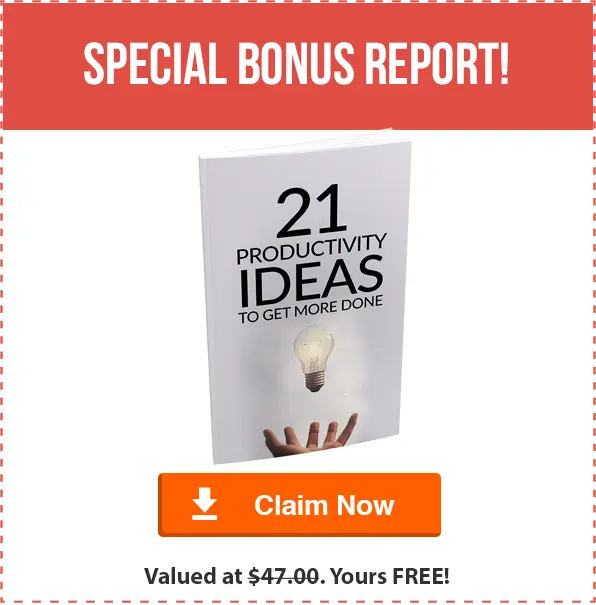
The orange bars look clickable.
Here, they are evidence.

The calls to action are embedded pixels inside the supplied PNG images; they are not live buttons. This lesson displays them as historical design material. Functional course, member and administrator actions are provided separately and labelled according to their real purpose.

FUNCTIONAL COPY LAB

Reveal the ethical rewrite.

Select each legacy line to compare it with accurate public-course wording.

Explore the free Work From Home course and review its complete learning plan.

Names the real access condition and lets the learner inspect the curriculum before deciding.

PRACTICAL ILLUSTRATION

A four-stage ethical decision path

  1. 01Observe

    Identify the first element seen, the promise, the product image and the requested action.

  2. 02Verify

    Confirm that every resource, price, deadline, bonus and access condition is real.

  3. 03Clarify

    Replace vague or exaggerated language with specific curriculum and access information.

  4. 04Invite

    Connect a functional action to the exact destination named on the button.

GUIDED ACTIVITY

Redesign one campaign panel.

Select one supplied graphic. Record its visual hierarchy, intended audience, main claim, supporting evidence and action. Rewrite the panel for this real public course using one truthful benefit and one functional call to action. Remove any value, urgency or availability claim you cannot verify.

Use the public course pageOpen the member learning areaEdit curriculum in Edwards Admin
Visual Arts Education logoVISUAL ARTS
EDUCATION