 EDWARDS
THEMES

FREE PUBLIC EDWARDS THEME COURSE
IM FOR NEWBIES DELUX
Build a responsible internet-marketing foundation through audience research, content, social communication, SEO, PPC, affiliate disclosure, analytics and a measurable 30-day campaign.
10 supplied HD lessons6 formal units6 assessment tests6 print handouts1 campaign capstoneFree public access
From first audience insight to a measurable campaign.
This competency-based curriculum follows the supplied lessons from first to last. Every unit connects definitions, an HD video, a visual explanation, an applied task, observable evidence, assessment criteria, a self-marking test and a printable handout.
- 01
Internet-Marketing Foundations
Define the field, choose a credible audience and value proposition, establish an owned home and write a measurable first objective.
Open Unit 1 → - 02
Content and Social Communication
Turn audience questions into useful, readable content and adapt it for purposeful, accessible community participation.
Open Unit 2 → - 03
Search Discovery and SEO
Match search intent with helpful, technically understandable pages and improve visibility through legitimate evidence and iteration.
Open Unit 3 → - 04
Paid Search and Measurable Acquisition
Plan—not launch—a bounded PPC experiment that joins truthful advertising, landing-page relevance, transparent arithmetic and spend protection.
Open Unit 4 → - 05
Affiliate and Integrated Channel Strategy
Evaluate affiliate relationships transparently and combine only the owned, outreach and partnership channels that support one evidence-based objective.
Open Unit 5 → - 06
Campaign Integration and Capstone
Synthesize the complete course into a small, ethical 30-day campaign with clear evidence, accessibility, limits and an improvement decision.
Open Unit 6 →
BEGINNER-SAFE PRACTICE
Learn the system. Test the evidence. Protect the audience.
Internet marketing changes quickly. The supplied recordings remain the course's source sequence, while this curriculum adds responsible expectations, accessibility, disclosure, measurement and a current-use check before any real campaign or spending decision.
Unit → topic → subtopic → evidence.
Read the meaning, watch the supplied HD lesson, study the definitions, create the visual illustration, complete the applied work, meet the assessment criteria, take the unit test and print the matching handout.
Internet-Marketing Foundations
Define the field, choose a credible audience and value proposition, establish an owned home and write a measurable first objective.
LESSON 1 · 6:45 · 1280×720 HD
TOPIC · Internet-marketing orientation
What Is Internet Marketing—and Why Should You Care?
Subtopic: Audience, value, channels, customer journeys and responsible expectations
Internet marketing is the planned use of connected digital channels to help a defined audience discover, understand, trust and act on a useful offer. It is broader than advertising: it includes research, content, search visibility, social communication, email, paid media, partnerships, measurement and continual improvement.
Source-context note
The recording introduces a large, changing field. Treat its channel examples as a starting point; platform interfaces and practices change, while audience, value, ethics and measurement remain durable foundations.
- Internet marketing
- Coordinated digital activity used to reach, serve and learn from an audience online.
- Audience
- A defined group of people whose needs, context and behaviour shape a message or offer.
- Value proposition
- A clear statement of the useful result an offer aims to provide and why it is relevant.
- Customer journey
- The stages a person may move through from awareness and consideration to action, use and advocacy.
Learning outcomes
- Explain internet marketing as a connected system rather than one isolated tactic.
- Identify the audience, value and intended action behind a digital message.
- Distinguish an educational goal from an unsupported income promise.
Visual illustration
Draw a five-stage journey: need → discovery → evaluation → action → relationship. Place one useful digital channel at each stage and show where feedback returns to planning.
Applied activity
Choose a real or imagined ethical product, service or community project. Write its audience, problem, value proposition and one measurable action without promising guaranteed results.
Assessment evidence
A one-page audience-and-value brief with a labelled customer-journey map.
- Audience is specific
- Value is useful and credible
- Journey stages are connected
- No guaranteed result is claimed
LESSON 2 · 10:26 · 1280×720 HD
TOPIC · Strategy and positioning
Starting With Solid Foundations
Subtopic: Purpose, niche, audience research, owned presence and achievable objectives
A marketing foundation connects a worthwhile purpose to a reachable audience, a credible position and an owned digital home. A niche is focused enough to guide decisions but broad enough to sustain useful content, relationships and learning.
Source-context note
The lesson discusses passion, differentiation, niche width and existing connections. Apply these ideas through evidence from real audience needs rather than intuition alone.
- Niche
- A focused area of need, interest or expertise served by a particular offer or body of content.
- Positioning
- The place an offer aims to occupy in an audience's mind relative to alternatives.
- Owned media
- Digital spaces an organization controls, such as its website, email list or resource library.
- SMART objective
- A goal that is specific, measurable, achievable, relevant and time-bound.
Learning outcomes
- Define a workable niche using audience need and creator capability.
- Write a responsible positioning statement.
- Translate a broad ambition into one SMART objective and baseline measure.
Visual illustration
Create a foundation diagram with four blocks—purpose, audience, position and owned home—supporting a measurable objective above them.
Applied activity
Interview or research three likely audience members using ethical, non-invasive questions. Synthesize patterns, select one initial niche and write a 30-day SMART objective.
Assessment evidence
An audience-insight sheet, positioning statement and 30-day objective.
- Research avoids invented evidence
- Niche is neither vague nor artificially narrow
- Position is differentiated
- Objective contains a metric and deadline
Content and Social Communication
Turn audience questions into useful, readable content and adapt it for purposeful, accessible community participation.
LESSON 3 · 9:38 · 1280×720 HD
TOPIC · Content strategy
Introducing Content Marketing
Subtopic: Useful ideas, formats, editorial planning, readability and calls to action
Content marketing is the deliberate creation and distribution of useful material that helps an audience learn, decide or solve a problem while building a trustworthy relationship. Strong content earns attention through relevance and substance, not deceptive headlines.
Source-context note
The recording refers to content that gets read and shared, including the attention mechanics of clickbait. The curriculum keeps the lesson on usefulness while rejecting deception.
- Content marketing
- Publishing useful material to attract, educate and retain a defined audience.
- Editorial calendar
- A schedule that records what will be published, for whom, where, when and why.
- Call to action
- A clear invitation to take a relevant next step.
- Clickbait
- A headline or preview designed mainly to provoke a click, often by exaggerating or withholding essential context.
Learning outcomes
- Match content ideas to audience questions and journey stages.
- Use headings, spacing, examples and visual hierarchy to improve readability.
- Write an interesting headline that accurately represents the content.
Visual illustration
Build a content tree: one audience question becomes a guide, short post, email, video and checklist. Connect every format to one accurate promise and one next step.
Applied activity
Develop a two-week editorial calendar containing four useful pieces. Draft one headline in an exaggerated form, then revise it for clarity, accuracy and audience value.
Assessment evidence
A four-item editorial calendar and one complete content brief.
- Each item answers a real question
- Format fits the channel
- Headline matches the material
- Call to action is relevant and proportionate
LESSON 4 · 10:52 · 1280×720 HD
TOPIC · Social communication
A Basic Introduction to Social Media Marketing
Subtopic: Platform purpose, community participation, integration and paid-versus-organic reach
Social media marketing uses networked platforms to listen, publish, converse and build community around useful ideas or offers. The platform should follow the audience and communication goal; posting everywhere without a purpose is not a strategy.
Source-context note
The recording recommends integrating social accounts with a website and building momentum over time. Current platform features vary, so learners should verify present-day controls before publishing.
- Organic reach
- Unpaid distribution generated through followers, recommendations, search and sharing.
- Engagement
- Meaningful audience actions such as replies, saves, shares, questions or qualified visits.
- Community management
- Listening, responding and moderating in ways that protect trust and participation.
- Platform fit
- The alignment between an audience, content format, goal and a platform's typical use.
Learning outcomes
- Select a platform because of audience and format fit.
- Connect social posts to an owned website or email destination.
- Plan respectful participation rather than repetitive self-promotion.
Visual illustration
Draw a hub-and-spoke system with the owned website at the centre and only the most suitable social channels around it. Label listening, publishing, conversation and referral paths.
Applied activity
Create three platform-aware posts from one content idea: an educational post, a conversation prompt and a website referral. Add an accessibility check and response plan.
Assessment evidence
A three-post mini-campaign with rationale, alt text and community-response notes.
- Platform choice is justified
- Posts are adapted rather than duplicated
- Community value comes before promotion
- Accessibility and moderation are included
Search Discovery and SEO
Match search intent with helpful, technically understandable pages and improve visibility through legitimate evidence and iteration.
LESSON 5 · 7:12 · 1280×720 HD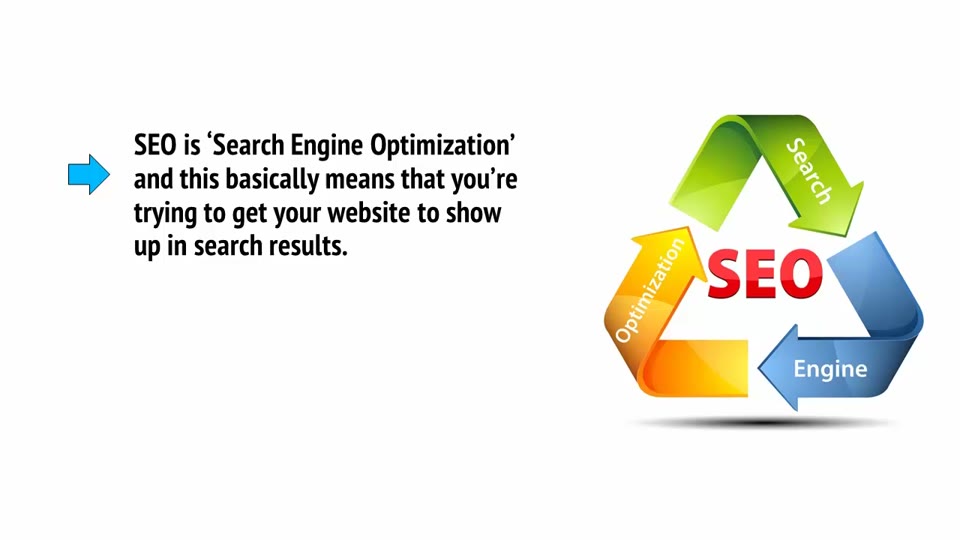
TOPIC · Search foundations
An Introduction to SEO — Part 1
Subtopic: Search intent, relevance, crawlability, helpful content and responsible optimization
Search engine optimization, or SEO, is the practice of making useful web content understandable, discoverable and satisfying for people who search. It combines audience language, technically accessible pages, relevant information and credible signals; it is not keyword repetition.
Source-context note
The recording explains older link- and phrase-based ranking ideas. Use them as history; modern practice should prioritize people, helpful content and technical accessibility over manipulation.
- SEO
- Improving a site's discoverability and usefulness in unpaid search results.
- Search intent
- The purpose behind a query, such as learning, comparing, locating or completing an action.
- Crawler
- Automated software used by search engines to discover and process web pages.
- Keyword stuffing
- Unnatural repetition of words in an attempt to manipulate rankings.
Learning outcomes
- Classify a query by search intent.
- Connect a page topic, title and structure to an audience question.
- Explain why manipulative repetition weakens quality and trust.
Visual illustration
Map query → intent → useful page → clear structure → satisfied visitor. Add a broken route showing keyword stuffing leading to poor readability.
Applied activity
Choose five authentic queries related to the course project. Group them by intent and produce one page outline with a clear title, headings and direct answer.
Assessment evidence
A search-intent table and a structured page outline.
- Queries relate to audience needs
- Intent labels are justified
- Outline answers the query
- Language remains natural
LESSON 6 · 4:38 · 1280×720 HD
TOPIC · Search improvement
An Introduction to SEO — Part 2
Subtopic: Authority, links, experience signals, measurement and sustainable iteration
SEO improvement is an evidence cycle: publish a useful, technically sound page; observe how people find and use it; earn legitimate references; correct gaps; and measure change over time. A link is valuable when it exists for a genuine editorial or navigational reason.
Source-context note
The lesson describes trusted sites, links and visitor behaviour. Avoid treating any single domain type or behavioural signal as a guaranteed ranking shortcut.
- Backlink
- A link from another website to a page on your site.
- Authority
- Earned trust associated with expertise, accuracy, reputation and relevant references.
- Search snippet
- The title, description and other information shown for a page in search results.
- White-hat SEO
- Sustainable optimization that follows search guidelines and prioritizes people.
Learning outcomes
- Distinguish editorial links from manipulative link schemes.
- Propose a useful reason another source might cite a page.
- Choose measures that show visibility and visitor usefulness.
Visual illustration
Draw an evidence loop: publish → index → observe queries → improve page → earn relevant citations → measure. Mark spam shortcuts outside the loop.
Applied activity
Audit one page using a title, headings, answer quality, internal links, accessibility, mobile readability and evidence checklist. Propose one legitimate link-earning asset.
Assessment evidence
A completed on-page audit and a link-earning concept brief.
- Recommendations are page-specific
- Links are earned rather than purchased deceptively
- Measures include usefulness
- Changes are prioritized
Paid Search and Measurable Acquisition
Plan—not launch—a bounded PPC experiment that joins truthful advertising, landing-page relevance, transparent arithmetic and spend protection.
LESSON 7 · 5:28 · 1280×720 HD
TOPIC · Paid search and performance
An Introduction to PPC
Subtopic: Auctions, keywords, ads, landing pages, budgets, conversion value and testing
Pay-per-click advertising, or PPC, is a paid model in which an advertiser is charged for qualified clicks or another agreed interaction. A responsible campaign connects query intent, ad promise and landing-page experience while limiting spend and measuring outcomes beyond clicks.
Source-context note
The recording uses a simple value-per-visitor example. Keep the arithmetic transparent and remember that attribution, refunds, costs and customer value can make real results more complex.
- PPC
- A digital advertising model that charges for clicks or specified interactions.
- Conversion
- A defined valuable action, such as a qualified enquiry, registration or purchase.
- Cost per acquisition
- Advertising spend divided by the number of attributed conversions.
- Landing page
- The focused page reached after an advertisement or campaign link is selected.
Learning outcomes
- Explain the relationship among intent, keyword, ad and landing page.
- Calculate break-even click value using stated assumptions.
- Set a bounded test budget and responsible stop rule.
Visual illustration
Create a PPC chain: query → auction → ad → landing page → conversion → review. Place budget limits and a stop rule above the chain.
Applied activity
Using a hypothetical offer, calculate conversion rate, value per visit and a maximum test cost. Draft two truthful ads and one landing-page wireframe; do not launch or spend money.
Assessment evidence
A PPC planning sheet with calculations, ad variants, landing-page sketch and stop rule.
- Assumptions are visible
- Arithmetic is correct
- Ad and page promises match
- Budget and stop rule protect the learner
Affiliate and Integrated Channel Strategy
Evaluate affiliate relationships transparently and combine only the owned, outreach and partnership channels that support one evidence-based objective.
LESSON 8 · 5:45 · 1280×720 HD
TOPIC · Partnership marketing
What Is Affiliate Marketing?
Subtopic: Merchant, publisher, audience trust, tracking, commissions and disclosure
Affiliate marketing is a performance-based arrangement in which a publisher may receive compensation for a tracked referral or sale. Ethical affiliate work recommends only relevant offers, discloses the relationship clearly and does not disguise persuasion as independent advice.
Source-context note
The recording emphasizes trust, useful funnels and reasonable commissions. The curriculum adds disclosure, consumer protection and evidence checks to every recommendation.
- Affiliate
- A person or organization that refers an audience to a merchant under a tracked compensation arrangement.
- Commission
- Compensation paid when the agreed qualifying action is attributed to a referral.
- Disclosure
- A clear notice explaining a material relationship that could affect how a recommendation is understood.
- Attribution
- The rule used to assign a conversion or other result to a marketing interaction.
Learning outcomes
- Map the roles and information flows in an affiliate arrangement.
- Write a clear, prominent disclosure in plain language.
- Evaluate an offer for relevance, evidence, audience risk and refund conditions.
Visual illustration
Draw a transparent affiliate triangle linking audience, publisher and merchant. Label content, referral, tracking, purchase, commission and disclosure.
Applied activity
Evaluate a hypothetical affiliate offer with a trust checklist. Draft an evidence-based review outline that includes limitations, alternatives and a disclosure before the first affiliate link.
Assessment evidence
An affiliate relationship map, offer audit and disclosed review outline.
- Material relationship is prominent
- Recommendation is relevant
- Benefits and limits are balanced
- No false scarcity or earnings claim appears
LESSON 9 · 4:14 · 1280×720 HD
TOPIC · Integrated channel strategy
More Strategies
Subtopic: Email, analytics, public relations, influencers, funnels and channel selection
An integrated strategy assigns each channel a specific job and connects the results to one shared objective. More channels do not automatically create more value; beginners should choose a small, testable mix that they can operate responsibly and measure.
Source-context note
The recording surveys analytics, press releases, email and influencer marketing. Current consent rules and platform tools vary by location and service; verify them before a real campaign.
- Email marketing
- Permission-based messages sent to subscribers for education, service and relevant offers.
- Analytics
- The structured collection and interpretation of data to understand performance and make decisions.
- Influencer marketing
- A disclosed collaboration with a creator who communicates to an established audience.
- Sales funnel
- A planned sequence of information and offers that supports movement toward a defined action.
Learning outcomes
- Compare channels by audience fit, control, cost, workload and measurement.
- Design a permission-based email and follow-up sequence.
- Set an influencer or public-relations brief with disclosure and evidence requirements.
Visual illustration
Build a channel scorecard around one objective. Use rows for fit, control, cost, creative demand, risk and measurement; highlight only the two channels selected for the first test.
Applied activity
Create a 30-day integrated plan using one owned channel and one outreach channel. Add three emails, one partnership brief, a measurement table and a review date.
Assessment evidence
A channel scorecard and 30-day integrated campaign plan.
- Channel choices have evidence
- Consent and disclosure are built in
- Metrics match the objective
- Workload is realistic
Campaign Integration and Capstone
Synthesize the complete course into a small, ethical 30-day campaign with clear evidence, accessibility, limits and an improvement decision.
LESSON 10 · 1:29 · 1280×720 HD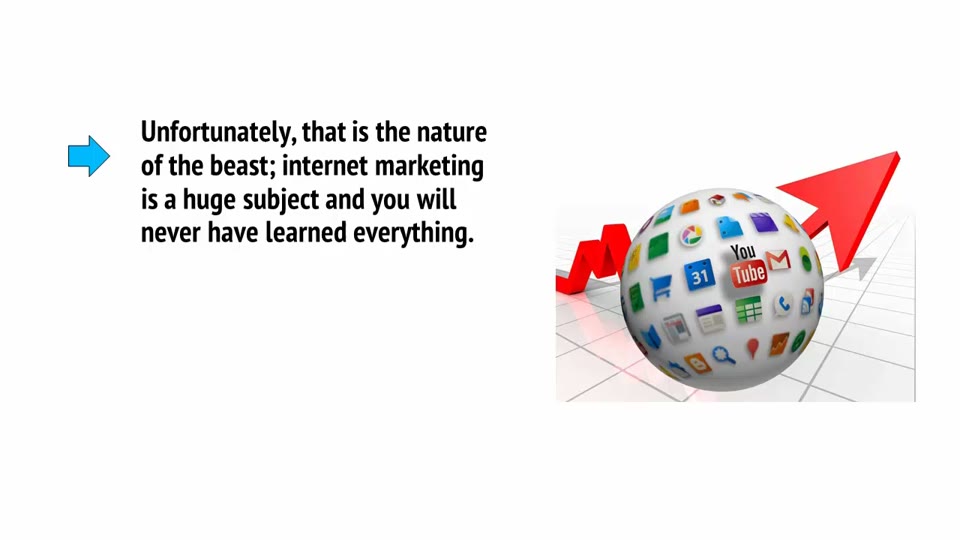
TOPIC · Integration and next steps
Conclusions: Build, Measure and Improve
Subtopic: Minimum viable campaign, experiment design, review, iteration and lifelong learning
A minimum viable campaign is the smallest responsible marketing system that can test a clear idea with a real audience. It uses a defined goal, one useful offer, a small channel mix, measurement, a review date and a decision rule for improving, pausing or stopping.
Source-context note
The conclusion stresses that internet marketing is broad and constantly changing. Use the curriculum as a durable method for learning—not as a claim that every platform tactic will remain current.
- Minimum viable campaign
- The smallest complete campaign capable of producing useful evidence.
- Key performance indicator
- A measure selected because it reflects progress toward a specific objective.
- Experiment
- A planned comparison used to learn whether a change affects a chosen result.
- Iteration
- A cycle of making a bounded change, measuring it and using the evidence to improve.
Learning outcomes
- Connect audience, content, search, paid and partnership decisions into one plan.
- Select indicators that measure attention, action and learning.
- Present an ethical 30-day campaign and review decision.
Visual illustration
Draw a campaign wheel: research → create → publish → distribute → measure → learn. Place audience value at the centre and ethics around the outer edge.
Applied activity
Assemble the unit evidence into a 30-day minimum viable campaign. Include baseline, calendar, assets, channel roles, budget ceiling, disclosures, accessibility checks, indicators and a final review meeting.
Assessment evidence
A complete beginner internet-marketing campaign portfolio and five-minute presentation.
- Plan forms one coherent system
- Measures answer the objective
- Ethics and accessibility are explicit
- Review decision follows evidence
A practical pathway through the entire course.
Use one ethical product, service or community project across the six units so every artifact becomes part of one coherent portfolio.
- 01 · ResearchAudience, value, niche and measurable objective
- 02 · CreateUseful content and social adaptation
- 03 · DiscoverSearch intent, helpful pages and legitimate authority
- 04 · TestHypothetical PPC maths, message match and stop rules
- 05 · ConnectDisclosure, email, partnerships and channel roles
- 06 · ImproveThirty-day plan, indicators, review and iteration
Verify live rules before live marketing.
These first-party references support the course's current-use checks. Platform interfaces and legal duties can change, and requirements may differ by location.
PUBLIC COURSE PREVIEW
Watch where internet marketing begins.
The opening lesson explains why internet marketing matters and why the field never stops changing. Then continue through ten HD lessons, six tests, six printable handouts and a complete beginner campaign portfolio.
SUMMATIVE CAPSTONE
Produce a 30-day Internet Marketing Starter Portfolio.
Submit an audience brief, value proposition, editorial calendar, social adaptation set, SEO page plan, PPC simulation, affiliate disclosure, integrated channel scorecard, measurement dashboard and evidence-led next decision.
- Audience, value and objective — 20%Research is visible; the position and SMART objective are credible.
- Content and channel design — 20%Content is useful, platform-aware, accessible and connected to an owned destination.
- Search and acquisition reasoning — 20%Intent, page quality, calculations, limits and message match are accurate.
- Ethics and audience protection — 20%Consent, privacy, disclosure, intellectual property and accessibility are explicit.
- Measurement and reflection — 20%Indicators fit the objective and the final decision follows evidence.
