 EDWARDS
THEMES

FREE PUBLIC EDWARDS THEME COURSE
MONETIZING YOUR BLOG
Build a useful blog, compare revenue models, place advertisements responsibly, disclose affiliate relationships, grow a permission-based email list and design an evidence-led marketing funnel.
10 HD lessons5 formal units5 assessment tests5 printable handoutsFree public access
From useful publishing to a responsible blog-income system.
This competency-based curriculum progresses from purpose and advertising to revenue design, affiliate partnerships, email relationships, automation and a complete marketing funnel. Every unit includes supplied HD video, definitions, an illustration, applied evidence, a test and a print-ready handout.
- 01
Foundations and Responsible Advertising
Define a useful blog business and design advertising placements that protect content, navigation and reader trust.
Open Unit 1 → - 02
Revenue Strategy and Preselling
Choose a balanced revenue mix and validate an offer through transparent, manageable preselling.
Open Unit 2 → - 03
Affiliate Networks and Trustworthy Links
Evaluate affiliate relationships, disclose material connections and create useful recommendation content.
Open Unit 3 → - 04
Building and Monetizing an Email List
Develop a permission-based list and connect relevant offers to educational email communication.
Open Unit 4 → - 05
Automation, Funnel and Capstone Plan
Test reliable automation, map the full reader journey and integrate the course into an evidence-led 90-day plan.
Open Unit 5 →
SEPTEMBER 2026 RESPONSIBLE-PUBLISHING CHECK
Use the supplied lessons with current official guidance.
Advertising, affiliate and email rules can change. Review the current terms of every provider and the laws that apply to your audience before publishing or collecting personal information.
Unit → topic → subtopic → evidence.
Read the meanings and definitions, watch each supplied HD lesson, complete the visual illustration and applied activity, submit the stated evidence, take the unit test and print the unit handout.
Foundations and Responsible Advertising
Define a useful blog business and design advertising placements that protect content, navigation and reader trust.
LESSON 1 · 4:56 · HD
TOPIC · Purpose, audience and value
Getting Started With Responsible Blog Monetization
Subtopic: Turning useful publishing into a sustainable business system
Blog monetization is the planned use of suitable revenue methods around original, useful content. Income is never automatic or guaranteed; it depends on audience trust, content quality, lawful practices, platform rules and continued improvement.
- Blog monetization
- The process of earning eligible revenue from a blog through suitable methods such as advertising, affiliate partnerships, services or owned products.
- Value proposition
- A clear explanation of whom the blog helps, what problem it addresses and why its approach is useful.
- Audience
- A defined group of readers with related needs, interests or goals.
- Revenue model
- The method through which a publication may earn money.
Learning outcomes
- Define responsible blog monetization without promising a financial result.
- Identify a specific reader and a useful content promise.
- Compare at least three possible revenue models.
Visual illustration
Draw a value triangle. Label the corners reader need, useful content and suitable revenue method. Place trust at the centre.
Applied activity
Write a one-page blog purpose statement that names the reader, the problem, the content promise, the ethical boundary and one measurable learning or service result.
Assessment evidence
A completed blog-purpose canvas and a comparison of three revenue models.
- Audience is specific
- Content promise is useful
- Revenue options fit the audience
- No earnings guarantee is made
LESSON 2 · 8:40 · HD
TOPIC · Display advertising and user experience
Ad Placement Strategies
Subtopic: Visible, responsive and policy-compliant ad locations
Ad placement is the deliberate positioning of advertisements so they remain distinguishable from editorial content and do not interfere with reading, navigation, video controls or download links.
- Display advertisement
- A clearly identified paid message shown within a website layout.
- Ad inventory
- The spaces a publisher makes available for advertisements.
- Viewability
- Whether an advertisement had a reasonable opportunity to be seen.
- Accidental click
- An unintended ad interaction caused by confusing or obstructive placement.
Learning outcomes
- Distinguish advertisements from editorial and navigation elements.
- Sketch responsive placements for desktop and mobile.
- Apply current publisher-policy safeguards to an ad layout.
Visual illustration
Create two page wireframes—mobile and desktop. Mark content in blue, navigation in green and clearly labelled advertising in orange. Leave safe space around buttons and links.
Applied activity
Audit one blog page for clutter, accidental-click risk, misleading labels and mobile overlap, then redesign the placement.
Assessment evidence
Before-and-after page maps with a written policy rationale.
- Ads are clearly labelled
- Content remains easy to find
- Interactive controls have safe spacing
- Mobile layout avoids overlap
Revenue Strategy and Preselling
Choose a balanced revenue mix and validate an offer through transparent, manageable preselling.
LESSON 3 · 6:58 · HD
TOPIC · Diversified revenue design
Blog Monetization Strategies
Subtopic: Advertising, affiliates, products, services, sponsorships and membership
A monetization strategy is an evidence-based choice about which revenue methods fit the blog's audience, content, capabilities and risk tolerance.
- Diversification
- Using more than one suitable revenue source to reduce dependence on a single provider.
- Owned product
- A resource or service controlled by the creator, such as a guide, class or consultation.
- Sponsorship
- A paid relationship in which a brand supports clearly disclosed content or placement.
- Membership
- Ongoing access to defined value under stated terms.
Learning outcomes
- Evaluate six common blog revenue methods.
- Match each method to audience readiness and content type.
- Choose a balanced model with stated risks and review dates.
Visual illustration
Build a six-spoke revenue wheel. Give every spoke an audience-fit score, effort score, control score and trust risk.
Applied activity
Complete a weighted decision matrix and select one primary and one supporting revenue method for a proposed blog.
Assessment evidence
A monetization mix with assumptions, responsibilities, risks and success measures.
- Choices match reader needs
- Costs and effort are visible
- Risks are acknowledged
- Success measures are defined
LESSON 4 · 6:26 · HD
TOPIC · Validation before full production
Preselling Strategies
Subtopic: Testing demand with transparent offers and delivery boundaries
Preselling is offering a clearly described product before final completion in order to test genuine demand. A responsible presale states what exists, what remains to be produced, the delivery date, refund terms and material limitations.
- Minimum viable offer
- The smallest clearly defined offer that can test whether intended customers value the proposed result.
- Validation
- Evidence collected before major investment to test an important assumption.
- Presale
- A purchase made before final delivery under disclosed conditions.
- Refund policy
- Published terms explaining when and how a customer may receive money back.
Learning outcomes
- Differentiate validation from unsupported hype.
- Draft a transparent presale description.
- Plan delivery, support and refund responsibilities.
Visual illustration
Draw a presale bridge with five checkpoints: problem evidence, offer, disclosure, delivery and review. A sale may proceed only when every checkpoint is clear.
Applied activity
Write a presale page for a small digital resource. Highlight every sentence that describes scope, date, price, limitation, refund and support.
Assessment evidence
A presale brief plus a risk-and-delivery checklist.
- Incomplete status is disclosed
- Delivery date is realistic
- Refund terms are visible
- Claims can be supported
Affiliate Networks and Trustworthy Links
Evaluate affiliate relationships, disclose material connections and create useful recommendation content.
LESSON 5 · 11:00 · HD
TOPIC · Affiliate partnership evaluation
Selecting Affiliate Networks
Subtopic: Relevance, terms, tracking, payment, reputation and disclosure
An affiliate network connects publishers with merchants and tracks eligible referrals. A network should be assessed for audience relevance, program terms, payment conditions, data practices and reputation—not only commission rate.
- Affiliate network
- A service that connects merchants and publishers and administers tracking, reporting and eligible commissions.
- Merchant
- The seller whose product or service is promoted.
- Commission
- Compensation calculated under an affiliate program's stated terms.
- Cookie duration
- The period during which a qualifying referral may remain attributable under program rules.
Learning outcomes
- Explain the roles of network, merchant, publisher and reader.
- Compare network terms beyond headline commission.
- Identify disclosure and record-keeping responsibilities.
Visual illustration
Draw a four-part relationship map: reader → publisher → network → merchant. Add tracking, disclosure, purchase and commission arrows.
Applied activity
Compare three real programs using relevance, exclusions, attribution, payment threshold, return rules, data access and reputation.
Assessment evidence
A dated affiliate-network comparison table and justified selection.
- Terms are cited
- Audience relevance is explained
- Risks and exclusions are noted
- Disclosure is planned
LESSON 6 · 11:57 · HD
TOPIC · Affiliate content and disclosure
Using Affiliate Links With Trust
Subtopic: Clear recommendations, material connections and measurable links
An affiliate link contains tracking information that may credit a publisher when a reader completes an eligible action. The commercial relationship must be disclosed clearly, close to the recommendation and in language readers can understand.
- Affiliate link
- A tracked link used to attribute eligible referrals under a program's rules.
- Material connection
- A financial, employment, personal, family or other relationship that could affect how an endorsement is understood.
- Disclosure
- A clear statement that explains a relevant commercial or personal relationship.
- Attribution
- The rule used to decide which source receives credit for an eligible action.
Learning outcomes
- Write a clear affiliate disclosure.
- Place disclosures where readers will notice them.
- Create recommendation content grounded in genuine experience and evidence.
Visual illustration
Annotate a sample review with disclosure beside the first affiliate recommendation, evidence for each claim, alternatives and a decision link.
Applied activity
Rewrite a promotional post as a balanced comparison that includes a plain-language disclosure, benefits, limits and the intended user.
Assessment evidence
A disclosed comparison article and affiliate-link register.
- Disclosure is hard to miss
- Claims are truthful
- Limitations are included
- Tracking records are organized
Building and Monetizing an Email List
Develop a permission-based list and connect relevant offers to educational email communication.
LESSON 7 · 5:47 · HD
TOPIC · Audience relationships and lead magnets
Building a Permission-Based Email List
Subtopic: Useful opt-in offers, consent, privacy and accessible forms
An email list is a group of contacts who receive messages under a clear permission and communication process. A good list begins with useful value, honest expectations, appropriate data collection and an easy way to unsubscribe.
- Lead magnet
- A useful resource offered through a transparent sign-up process.
- Opt-in
- An affirmative action through which a person asks to receive described communication.
- Data minimization
- Collecting only the personal information needed for a stated purpose.
- Unsubscribe
- A clear method for stopping future marketing messages.
Learning outcomes
- Design a focused lead magnet for a defined reader problem.
- Explain what data is collected and why.
- Improve an older squeeze-page concept for modern consent and accessibility.
Visual illustration
Draw a trust path: useful article → clear offer → consent form → promised resource → preference and unsubscribe controls.
Applied activity
Study the supplied legacy squeeze-page assets, then redesign the form with a visible purpose statement, descriptive label, privacy notice and no pre-filled instruction inside the email field.
Assessment evidence
A revised opt-in wireframe and data-purpose statement.
- Value is specific
- Consent is clear
- Only needed data is requested
- The form is readable and accessible
LESSON 8 · 5:38 · HD
TOPIC · Email value and responsible offers
Monetizing Your Email List
Subtopic: Educational sequences, segmentation, offers and measurement
Email-list monetization connects relevant paid offers to subscribers through useful, permission-aware communication. Trust is protected when subject lines are accurate, advertising is identified where required and opt-out choices remain clear.
- Segmentation
- Grouping subscribers by relevant, lawfully obtained characteristics or actions so communication can be more useful.
- Commercial email
- A message whose primary purpose is advertising or promoting a commercial product or service.
- Conversion
- A defined action completed after a message, such as an eligible purchase.
- Lifetime value
- A historical estimate of eligible value associated with a customer relationship; it is not a guarantee.
Learning outcomes
- Plan an educational email sequence before presenting an offer.
- Separate commercial from transactional purposes.
- Measure response without hiding costs, unsubscribes or complaints.
Visual illustration
Create a five-message arc: welcome, quick win, deeper lesson, relevant offer and follow-up. Add purpose, disclosure and unsubscribe checkboxes to every message.
Applied activity
Draft a five-email sequence for one lead magnet and annotate value, commercial purpose, call to action and reader choice.
Assessment evidence
A complete email sequence and measurement plan.
- Subject lines are accurate
- Every message has a clear purpose
- Offer matches the reader
- Opt-out remains easy
Automation, Funnel and Capstone Plan
Test reliable automation, map the full reader journey and integrate the course into an evidence-led 90-day plan.
LESSON 9 · 5:06 · HD
TOPIC · Reliable email workflows
List Automation
Subtopic: Triggers, delays, conditions, suppression and quality assurance
List automation uses defined triggers and rules to send messages or update records. Automation does not remove responsibility: every path needs testing, consent checks, suppression controls and human review.
- Trigger
- An event that begins an automated workflow.
- Condition
- A rule that directs a contact into a particular path.
- Suppression list
- A protected record of addresses that should not receive specified messages.
- Workflow
- An ordered set of automated actions, timing rules and decisions.
Learning outcomes
- Map a list-automation workflow.
- Add consent, unsubscribe and suppression safeguards.
- Test success, failure and duplicate-entry paths.
Visual illustration
Use a flowchart with entry trigger, consent check, welcome message, delay, engagement condition, useful follow-up and exit or suppression path.
Applied activity
Build a paper prototype of an automation and run three test personas through it: active subscriber, non-engaged subscriber and unsubscribed contact.
Assessment evidence
A workflow map, test record and correction log.
- Every trigger is defined
- Unsubscribed contacts are suppressed
- Failure paths are tested
- Timing respects the reader
LESSON 10 · 8:41 · HD
TOPIC · Integrated reader journey
Designing a Responsible Marketing Funnel
Subtopic: Discovery, trust, conversion, delivery, support and improvement
A marketing funnel is a model of the stages through which a reader may move from first discovery to an informed decision and continued relationship. It should help people choose—not pressure or mislead them.
- Awareness
- The stage at which a person first encounters a relevant topic or publication.
- Consideration
- The stage at which a person compares information, options and fit.
- Conversion rate
- The percentage of eligible visitors who complete a defined action.
- Funnel leakage
- A point where people leave a journey, sometimes because the message, experience or offer does not fit.
Learning outcomes
- Map the complete reader journey across blog and email touchpoints.
- Connect each stage to useful content and an appropriate measure.
- Identify ethical improvements from evidence.
Visual illustration
Draw six connected stages: discover, learn, subscribe, consider, decide and continue. Under each, add reader need, content, action, evidence and exit choice.
Applied activity
Create a 90-day blog monetization plan with a content calendar, one lead magnet, a five-email sequence, an affiliate-disclosure pattern and monthly review dates.
Assessment evidence
A complete funnel portfolio, dashboard and reflective action plan.
- Journey is coherent
- Every offer has evidence
- Reader choice is respected
- Measures lead to a defined improvement
SUPPLIED RESOURCE STUDIO
Study the original digital-product and squeeze-page artwork.
These provided files are learning examples. The historical HTML is supplied as read-only text so its inactive placeholder form cannot collect information or process a transaction.
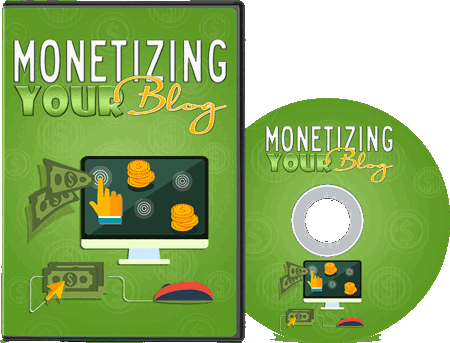 Course and digital-product cover study.Commerce imagery for discussing payment context and reader trust.
 Call-to-action example for hierarchy, clarity and ethical revision.

SUMMATIVE CAPSTONE
Produce a responsible blog monetization portfolio.
Present a reader profile, value proposition, ten-post content map, compliant ad wireframes, revenue-method matrix, affiliate disclosure pattern, lead magnet, five-email sequence, tested automation, complete funnel and 90-day improvement plan. Publishing or spending money is not required.
- Audience and content value — 20%Reader evidence, purpose, originality and useful content sequence.
- Revenue and advertising design — 20%Audience fit, visible assumptions, clear ad placement and platform checks.
- Affiliate trust — 20%Program evaluation, honest recommendations, disclosure and records.
- Email and automation — 25%Consent, accessibility, educational value, opt-out, testing and suppression.
- Funnel, reflection and improvement — 15%Coherent journey, meaningful measures, review dates and ethical boundaries.
